Most women never think about testosterone. It feels like a male problem. But testosterone is present in every woman’s body, and when it drops, the symptoms show up in ways that look like stress, aging, or burnout instead of a hormone issue.
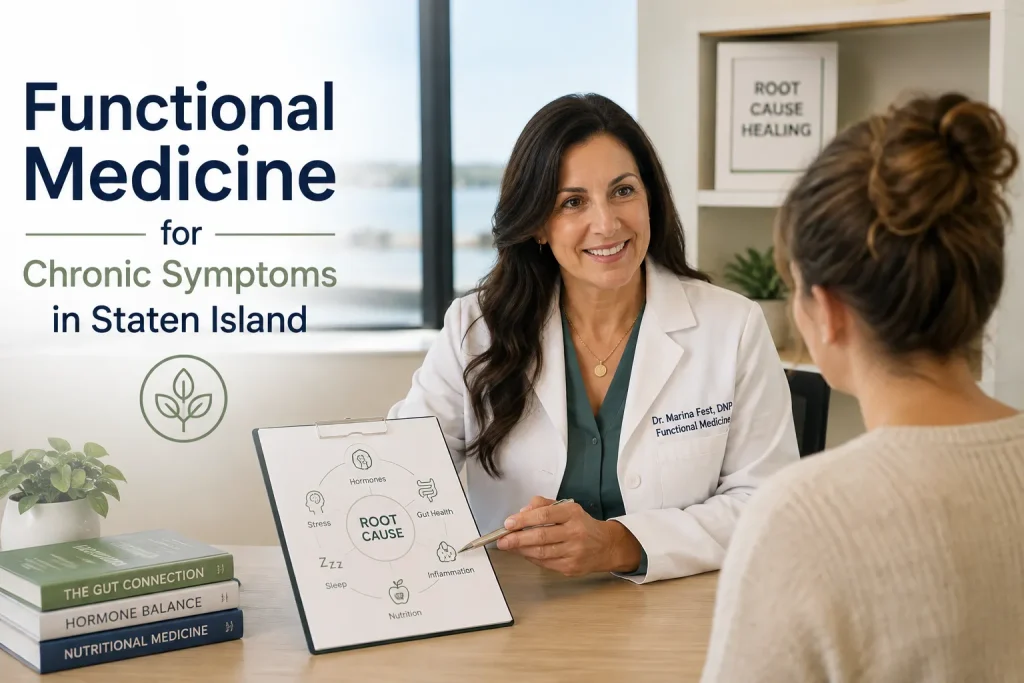
At Functional Medicine by Dr. Marina Fest, DNP, we practice functional medicine that gets to the why. Our Staten Island practice sees women regularly who have spent months feeling off with no clear answer. The labs come back normal. The symptoms stay. That is exactly the gap functional medicine is designed to close.
Why Low Testosterone in Women Goes Undetected for So Long
Standard lab panels often skip free and total testosterone together. Conventional care focuses on managing what shows up, not on finding why it started. So women end up with explanations that do not quite fit, and symptoms that keep coming back without a real plan behind the treatment.
Dr. Fest approaches this differently. She evaluates hormones alongside metabolism, digestion, inflammation, and lifestyle as connected systems. Nothing gets looked at alone because nothing works alone in the body.
Fatigue That Rest Cannot Fix
You are sleeping. You are not overworking. And you are still exhausted every single day. Persistent fatigue and low energy are conditions we specifically investigate here, and low testosterone is one of the first hormonal factors Dr. Fest looks at when rest is simply not helping.
When testosterone drops, the body loses capacity for energy production and physical recovery. That is a biology issue, not a lifestyle one. Understanding that difference is what changes how we build your care plan.
Mood Changes That Feel Impossible to Explain
Irritability without a clear trigger, low motivation, and feeling emotionally flat for no obvious reason. These symptoms get labeled as anxiety or stress and rarely get traced back to hormones. Testosterone plays a direct role in mood regulation, and a drop in levels can affect how you feel emotionally just as much as physically.
We evaluate mood-related symptoms as part of a broader hormonal and metabolic assessment. If your emotional baseline has shifted and nothing explains it, that conversation belongs in your care evaluation here.
Unexplained Weight Changes and Muscle Loss
Testosterone influences body composition. When levels fall, women often notice gradual muscle loss and weight changes that do not respond to diet or exercise changes. This is one of the hormonal factors Dr. Fest investigates when patients come in frustrated by weight resistance that their usual habits simply cannot overcome.
Her functional evaluation looks at medical history, lifestyle, stress, environment, digestion, hormones, and prior labs together. Weight resistance rarely has one cause, and her process is built to find the actual combination driving it for each patient.
Brain Fog and Weakened Concentration
Slower thinking, trouble focusing, and forgetting things more than usual. These feel like burnout symptoms, but they can point directly to low testosterone. Weakened concentration is connected to hormonal decline, and brain fog is a condition we address through functional medicine at this practice.
If your mental clarity has changed and stress alone does not explain it, hormones are worth a serious look. Dr. Fest builds her evaluation around finding that root cause, not around managing the symptom on the surface.
Low Libido and Perimenopause Overlap
Low libido is a real clinical concern in women, and it connects directly to testosterone levels. Patients often hesitate to raise it. We want to be clear that it belongs in the conversation. Perimenopause and menopause also intensify many of these symptoms, and Dr. Fest specifically addresses both as part of her hormone and functional medicine work here.
Testosterone does not work separately from estrogen and progesterone. Understanding the full hormonal picture is what makes a personalized treatment plan actually work for your specific body and not just address one isolated number.
What Hormone Evaluation and Treatment Look Like Here
Every patient starts with a full evaluation before anything is recommended. Dr. Fest reviews your complete medical background, current symptoms, prior labs, and lifestyle. Comprehensive testosterone testing covers both free and total testosterone levels, so the picture is complete before any treatment decision is made.
For women, testosterone therapy options are carefully dosed, individually designed, and medically supervised throughout. Bioidentical testosterone is available, formulated to closely resemble the body’s own hormones. Regular follow-ups are built into every plan, so your progress is tracked, and your protocol adjusts as your health responds.
Take the Next Step Toward Feeling Like Yourself Again
If you have been told your labs are normal, but you still feel off, this practice was built for exactly that situation. Dr. Marina Fest, DNP, offers comprehensive hormone testing and personalized care for women in Staten Island. Florida patients can access telehealth services.
You deserve real answers, not reassurance that everything looks fine. Call us, book online, or send us a message, and we will take it from there.
Call: (347) 222-9107 Email: lifestyledoctorwellness@gmail.com Address: 2627 Hylan Blvd C5, Staten Island, NY 10306 Hours: Monday through Wednesday 9 AM to 4 PM, Thursday 11 AM to 4 PM, Friday 9 AM to 4 PM
Frequently Asked Questions
Can women actually have low testosterone?
Yes. Women produce testosterone naturally, and when levels drop, symptoms like fatigue, mood changes, brain fog, muscle loss, and low libido can follow.
What does the evaluation process involve?
Dr. Fest tests free and total testosterone levels and reviews your medical history, lifestyle, digestion, metabolism, and prior labs before recommending anything.
Is testosterone therapy safe for women?
Under qualified medical supervision, testosterone therapy for women is considered safe. Plans are carefully designed, individually designed, and monitored through regular follow-ups.
How is this different from seeing a regular doctor?
Conventional care manages symptoms. Dr. Fest investigates root causes across hormones, gut health, metabolism, nutrition, and lifestyle, then builds a plan around what she actually finds.