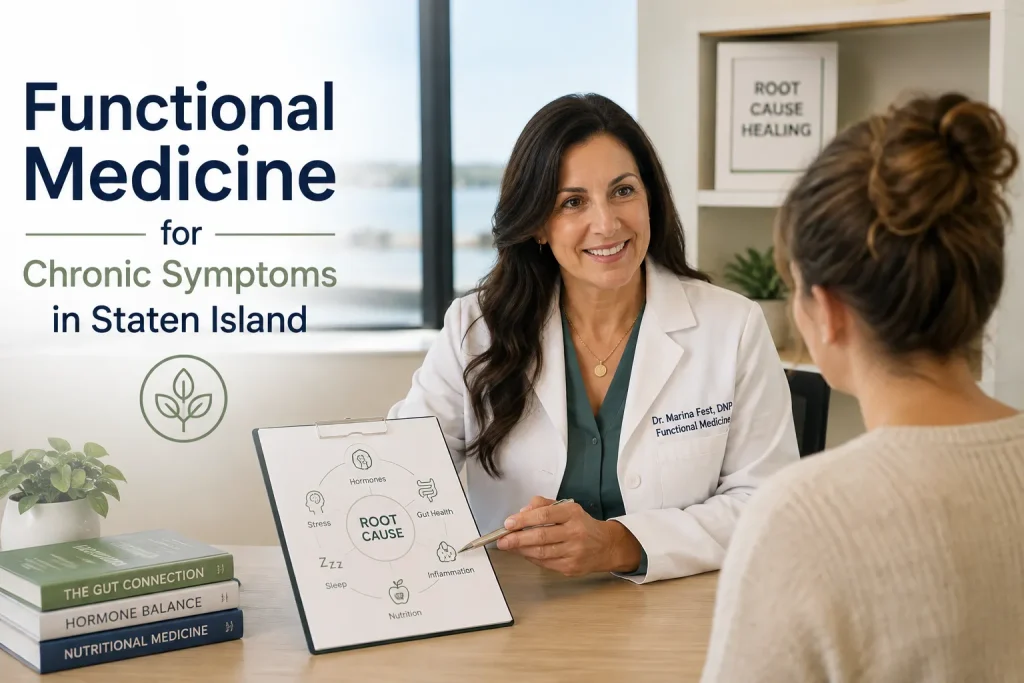
You’ve changed your diet. You’ve cut out foods. The bloating still comes back. That’s not a willpower problem. That’s a missing information problem.
At Functional Medicine by Dr. Marina Fest, DNP, in Staten Island, we use GI-MAP testing to find what standard labs routinely miss. When you know what’s actually happening in your gut, treatment finally has something real to work from.
What GI-MAP Testing Reveals That Standard Tests Miss
Most stool panels screen for obvious infections and stop there. The GI-MAP goes much further, mapping your entire gut microbiome using advanced DNA-based qPCR technology. That difference matters when the cause of your bloating isn’t obvious.
The test identifies harmful pathogens like H. pylori, parasites, Candida, and certain viruses. It also measures beneficial bacteria levels, inflammatory markers, digestive enzyme function, and leaky gut markers. Standard testing simply doesn’t capture that level of detail.
Who Should Consider GI-MAP Testing
Chronic bloating and gas are the most common reasons patients ask us about this test. It also applies to IBS-like symptoms, acid reflux, food sensitivities, constipation, and diarrhea.
Patients dealing with autoimmune concerns, skin conditions like eczema or acne, chronic fatigue, or brain fog often benefit too. What shows up in your gut microbiome frequently connects to symptoms that seem completely unrelated to digestion.
How Your Results Build Your Treatment Plan
Dr. Fest reviews every GI-MAP marker alongside your full health history, not as isolated numbers. From there, she builds a personalized protocol targeting your specific imbalances through nutrition strategies, gut restoration support, and supplementation.
Nothing in that plan is generic. It reflects your biology, your results, and the details you share during your comprehensive evaluation. That’s the reason we use this test rather than guessing.
What the Care Process Looks Like Step by Step
Every patient begins with a thorough evaluation covering medical history, lifestyle, stress, digestion, hormones, and prior labs. Dr. Fest takes the time needed before ordering any testing. GI-MAP is recommended only when it’s clinically appropriate for your situation.
Once results are in, your personalized root-cause protocol begins. Care continues with progress tracking, follow-up testing when needed, and ongoing education so you understand exactly what is changing and why.
Why Patients in Staten Island Trust Dr. Fest With This Work
Dr. Marina Fest holds a Doctor of Nursing Practice degree with extensive experience in primary care and advanced training in functional medicine. She built this practice after recognizing that chronic symptoms rarely resolve when care only manages a diagnosis.
Her approach evaluates digestion, inflammation, metabolism, hormones, and lifestyle together. Patients consistently describe her as a careful listener who gives each visit real time and attention, which directly shapes the quality of the protocol you receive.
Ready to Find Out What Your Gut Is Actually Telling You
Chronic bloating deserves a real answer. If standard testing has left you without one, GI-MAP testing may be the next step worth taking with a provider who will actually act on what the results show.
Dr. Fest sees patients in person in Staten Island and offers telehealth for patients in Florida. Call (347) 222-9107, email lifestyledoctorwellness@gmail.com, or book your consultation online today.
FAQs
What does the GI-MAP test involve?
It’s a home stool collection test. The sample is analyzed using DNA-based qPCR technology to identify pathogens, bacterial levels, inflammation markers, and digestive function inside your gut.
How is it different from a standard stool test?
Standard panels screen for obvious infections only. GI-MAP identifies specific bacteria, fungi, parasites, and viruses using DNA analysis, giving Dr. Fest data that routine labs don’t provide.
What symptoms make someone a good candidate?
Bloating, gas, acid reflux, IBS-like symptoms, food sensitivities, chronic fatigue, brain fog, and skin conditions like eczema or acne are all relevant reasons to consider this test.
What happens after the results come in?
Dr. Fest reviews results alongside your full evaluation and builds a personalized protocol. Care continues with progress tracking, follow-up testing, and ongoing support throughout your treatment.