
A GI-MAP beneficial bacteria and opportunistic pathogens section can look intimidating when you first see a report. At Lifestyle Doctor Wellness, we do not treat one flagged organism as a diagnosis by itself. We interpret the pattern alongside your symptoms, medical history, digestion, prior laboratory work, medications, diet, and the intestinal health markers that appear elsewhere on the report. That context matters because the gut microbiome is an ecosystem, not a simple list of good and bad microbes.
Our goal is to understand what the report can contribute to the bigger clinical picture. A GI-MAP can provide useful information about commensal or keystone organisms, opportunistic microbes, pathogens, fungi or yeast, and intestinal health markers, but the meaning of those findings depends on how they fit together and how you are actually feeling.
Why We Read the GI-MAP as a Pattern, Not a Scorecard
A common mistake is to scan the report for red or high values and assume that every abnormal-looking item requires treatment. We take a more measured approach. Some organisms are expected residents of the gastrointestinal tract, while others become more relevant when they are present in a certain quantity, occur alongside symptoms, or appear with other signs of imbalance. We also consider whether the overall pattern suggests reduced microbial resilience, overgrowth, inflammation, or impaired digestive function.
What beneficial or commensal bacteria tell us
The GI-MAP interpretive framework includes commensal and keystone bacteria, which are organisms commonly associated with the normal microbial community. We look at these values for balance and context rather than chasing a single ideal number. A lower abundance of one organism does not automatically explain fatigue, bloating, constipation, skin symptoms, or another complaint. It can, however, become one piece of evidence when several parts of the clinical picture point in the same direction.
We avoid treating diversity as a single universal target
There is no one microbiome composition that is perfect for every person. Age, diet, geography, medication exposure, bowel habits, illness history, and many other factors can shape microbial patterns. That is why we avoid turning a laboratory reference into a rigid definition of what your gut should look like.
What opportunistic pathogens mean in context
Opportunistic organisms are different from classic pathogens. The term generally describes microbes that may exist without causing disease but can become more clinically relevant under certain conditions. We therefore look at the amount detected, your symptom pattern, other organisms on the report, and the intestinal environment before deciding how much weight a finding deserves.
For example, a person with ongoing bloating, irregular stools, or digestive discomfort may need a different discussion than someone with no gastrointestinal symptoms who happens to have a report finding. We do not assume the laboratory result is the entire explanation.
How We Connect the Microbiome Findings With the Rest of the Report
The strongest interpretation comes from combining categories. The same organism may have a different practical meaning depending on what is happening with digestive function, inflammation-related markers, immune activity, or other microbes. This is one reason our functional medicine evaluation starts with the broader health picture rather than ordering a stool test in isolation.
We compare microbial findings with symptoms and history
We review when symptoms started, how they change with food or stress, bowel patterns, previous gastrointestinal infections, medication history, past antibiotics when relevant, prior testing, and any treatments already tried. We also ask whether symptoms extend beyond digestion, such as fatigue or brain fog, because gut findings can be part of a broader systems-based evaluation without automatically being the cause of every symptom.
We consider whether other testing is actually necessary
A GI-MAP result does not mean that every person needs hormone panels, micronutrient testing, inflammatory markers, or additional specialty testing. Our care process uses testing when it is clinically appropriate. We select the next step based on the questions that remain after the history, examination when needed, and existing data are reviewed.
What We Do Not Conclude From a Single GI-MAP Finding
We do not diagnose a systemic illness simply because an opportunistic organism is elevated. We do not assume low beneficial bacteria prove that you need a specific probiotic. We do not treat a microbiome report as a substitute for standard medical evaluation when symptoms could have another cause. Those boundaries are important because a highly detailed test can still be misinterpreted if it is separated from clinical context.
Why treatment must be individualized
When the report supports a clinically meaningful gut pattern, recommendations may involve nutrition, lifestyle, or other individualized interventions based on the full evaluation. We avoid generic protocols built around one organism. What is appropriate depends on your findings, symptoms, medications, health history, and goals.
How GI-MAP Fits Into Care at Lifestyle Doctor Wellness
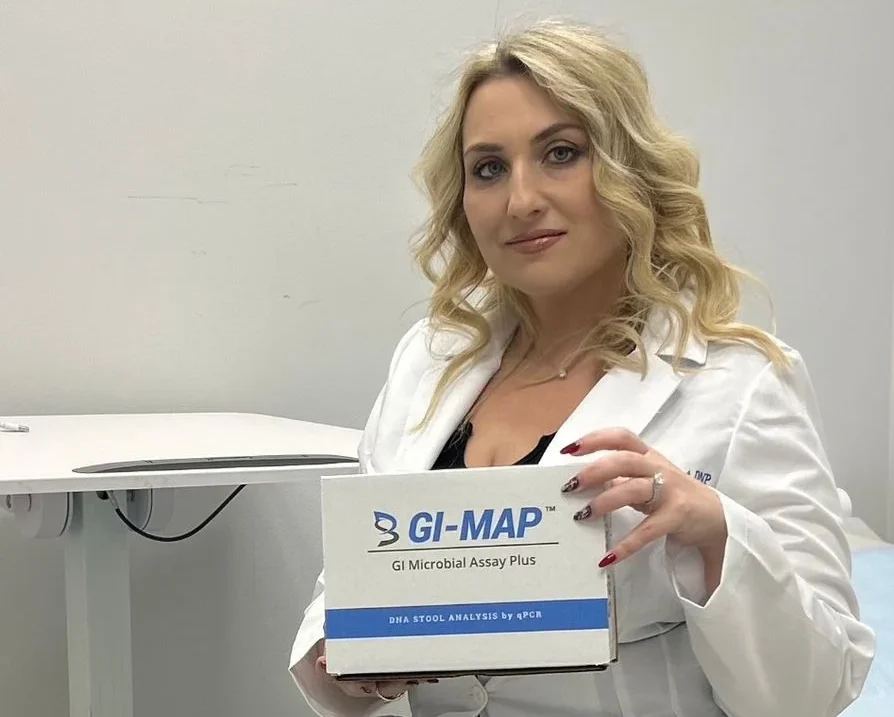
At Lifestyle Doctor Wellness, Dr. Marina Fest, DNP, may use GI-MAP microbiome analysis when clinically appropriate as part of a broader root-cause evaluation. We review digestive and hormonal health, lifestyle and stress factors, prior labs, and other relevant information before deciding what the test means for you. Our goal is not to collect more data for its own sake. It is to turn useful data into a clearer clinical question and a more focused plan.
If recurring digestive symptoms, brain fog, fatigue, or other concerns have left you with unanswered questions, you can learn more about who our practice is designed for or schedule a consultation through our website. Functional medicine services are cash-based and are not billed to insurance.
Frequently Asked Questions
Does a high opportunistic organism automatically mean I have an infection?
No. Opportunistic organisms need to be interpreted in context. We consider the amount detected, your symptoms, other findings, and the overall intestinal environment before deciding how clinically important the result may be.
Are low beneficial bacteria always a problem?
Not necessarily. We do not use one bacterial value as a diagnosis. We look at the broader microbial pattern, intestinal markers, symptoms, diet, medications, and health history.
Can GI-MAP diagnose the cause of all my symptoms?
No. GI-MAP can contribute useful microbiome and intestinal information, but it does not replace a full medical evaluation and cannot prove that every symptom comes from the gut.
Will everyone with an abnormal GI-MAP receive the same protocol?
No. We individualize recommendations according to the overall clinical picture rather than applying a standard protocol to one laboratory result.
Is GI-MAP ordered for every functional medicine patient?
No. Lifestyle Doctor Wellness lists GI-MAP among specialized testing options that may be used when clinically appropriate.